Food and Consumer Education
Learn how MGS's Food and Consumer Education programme builds life skills in students, covering food science, smart spending, and sustainable living.
Aims
The Food and Consumer Education (FCE) Programme at MGS aims to equip our students with the knowledge and skills for independent and sustainable living in the 21st century. The lifeskills acquired through the FCE programme will empower them to be good stewards of resources for themselves and community through critical thinking and wise decisions.
Pedagogical Approach
Deep Learning for students to develop the six Global Competencies with a focus on Creativity and Communication.
Differentiated Instruction to cater to the different learning needs of our students.
Experiential, Inquiry, Blended, Activity & Problem-Based Learning to better engage our students in deep learning of the various topics.
Formative Assessment - Self & Peer Assessment to promote independent and reflective learning.
Design Thinking as an ideating tool for FCE coursework.
Curriculum
Food & Consumer Education (FCE) is a common curriculum subject for Lower Secondary Students. Our FCE curriculum is developmentally appropriate and accessible to students from all courses, catering to their overall strengths, interests and learning needs.
BIG IDEAS
Food Studies - Diet & Health; Food Management.
Consumer Studies - Basic Resource Management and Financial Literacy.
Food Science - Application of food science principles in food preparation and cooking.
Lower Secondary FCE Course Outline
Financial Literacy and Money Management
Sustainable Consumption of Goods & Services
Being a Discerning Consumer
Smart Shopping
Balanced Diet
Meal Planning
Food Safety and Cooking of Food
Food & Culture
Culinary Skills
Basic Needlework Skills
National Syllabuses
Please refer to this link (opens in new tab).
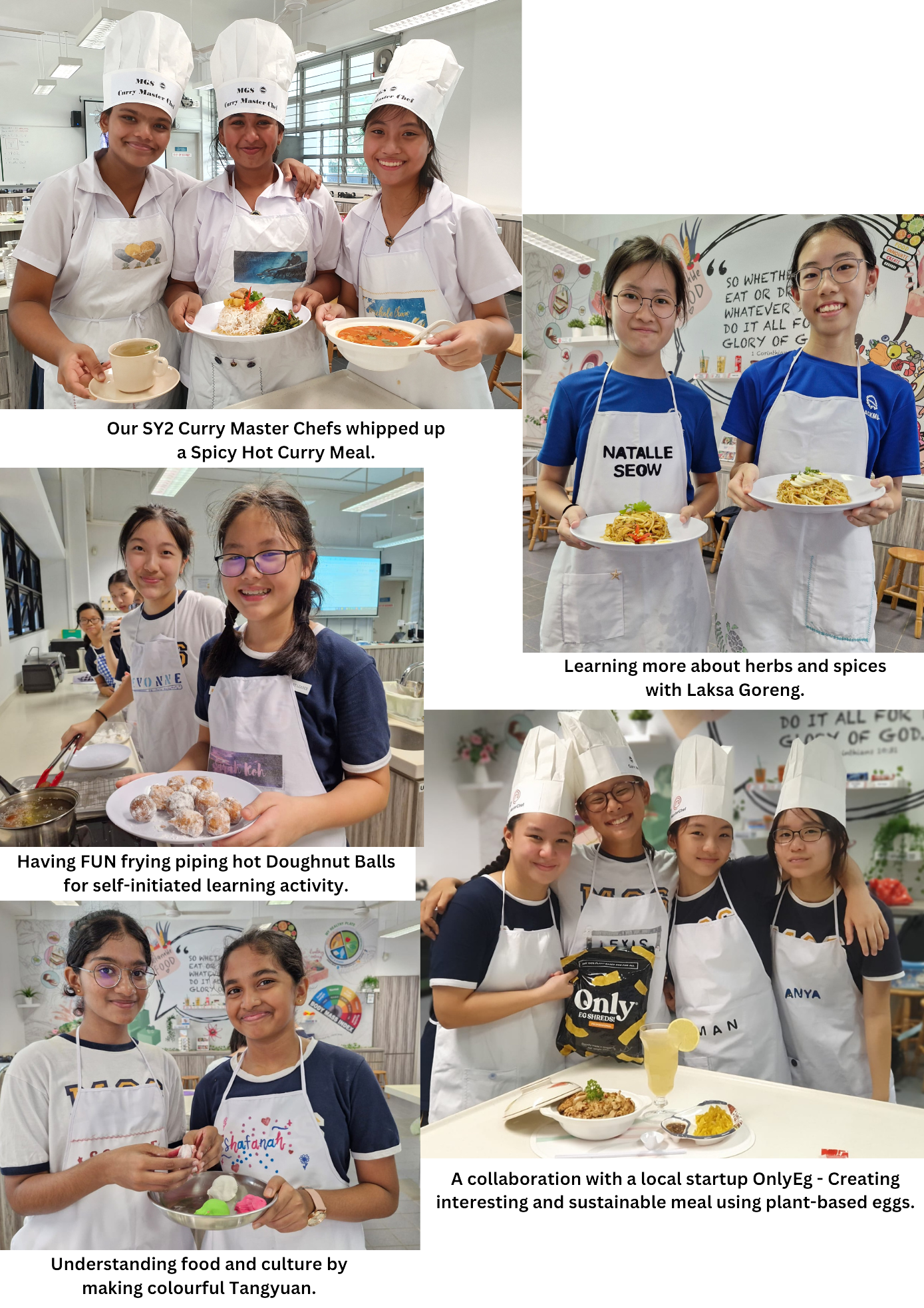
Gallery